

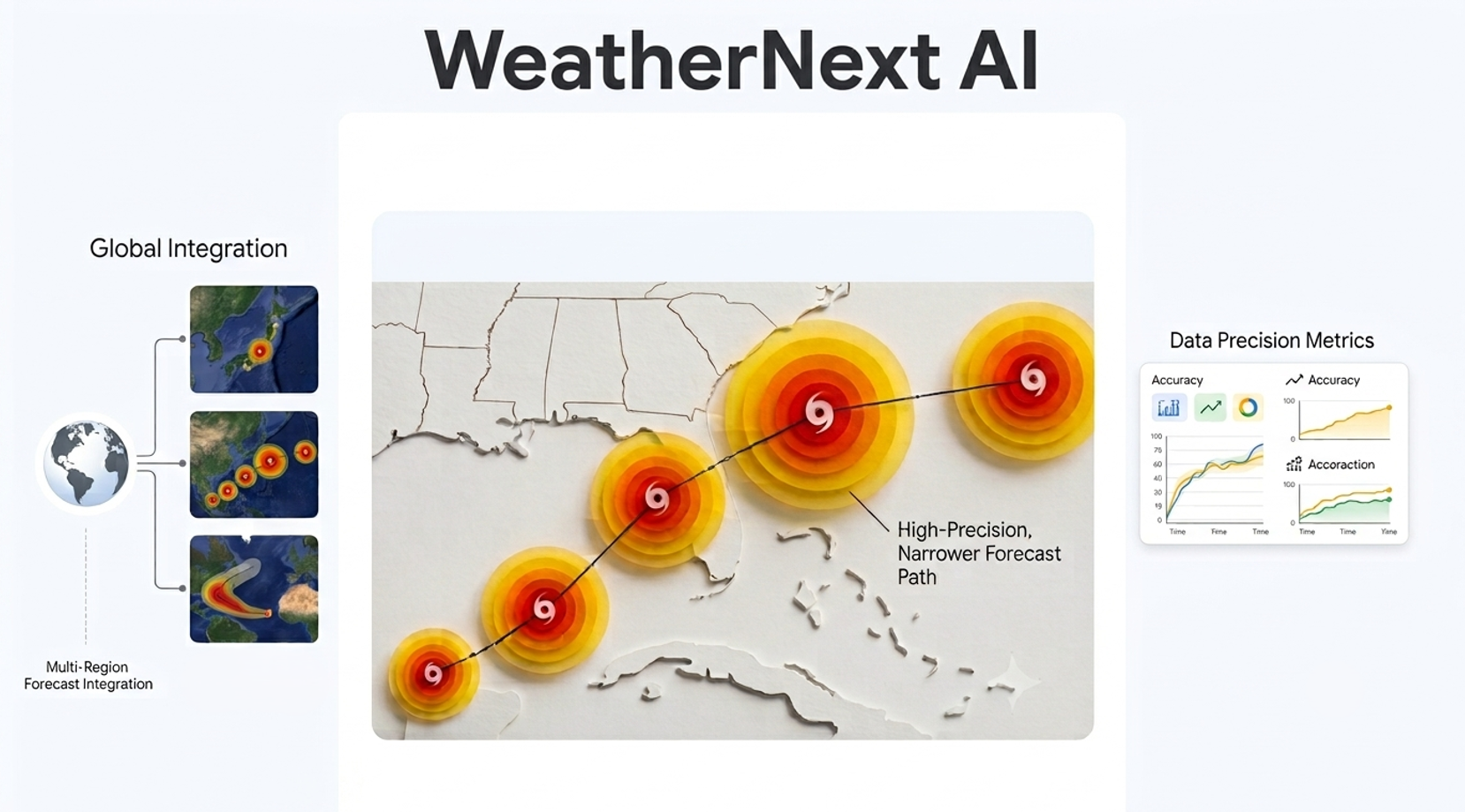
A research team has unveiled an artificial‑intelligence model that predicts cyclones more reliably than the standard forecasting methods used by meteorological agencies. The AI system was tested against historic storm data and consistently delivered sharper track and intensity forecasts. Traditional models rely on physics‑based equations, while the new approach learns patterns from thousands of past events. The Guardian reported that the AI model outperformed the benchmark across multiple performance metrics. Improved predictions could give emergency managers more lead time to issue evacuations. The development marks a notable shift toward data‑driven weather science.
This performance gap is rooted in how the model processes vast climate datasets. The following points illustrate what changed as a result of the new research.
What Changed?
- The AI model achieved higher accuracy in predicting cyclone paths compared with standard physics‑based methods.
- Researchers demonstrated the model’s superiority using a large historical dataset of past cyclones.
- The study highlighted the ability of machine learning to capture complex atmospheric patterns that traditional models struggle with.
- Meteorological agencies now have a proven alternative that could be integrated into operational forecasting pipelines.
- The success encourages further investment in AI‑driven tools for other extreme‑weather phenomena.
AI Improves Cyclone Forecast Accuracy.
The breakthrough shows that AI can deliver more accurate cyclone forecasts than conventional techniques, meaning earlier warnings and potentially fewer casualties in future storms.