

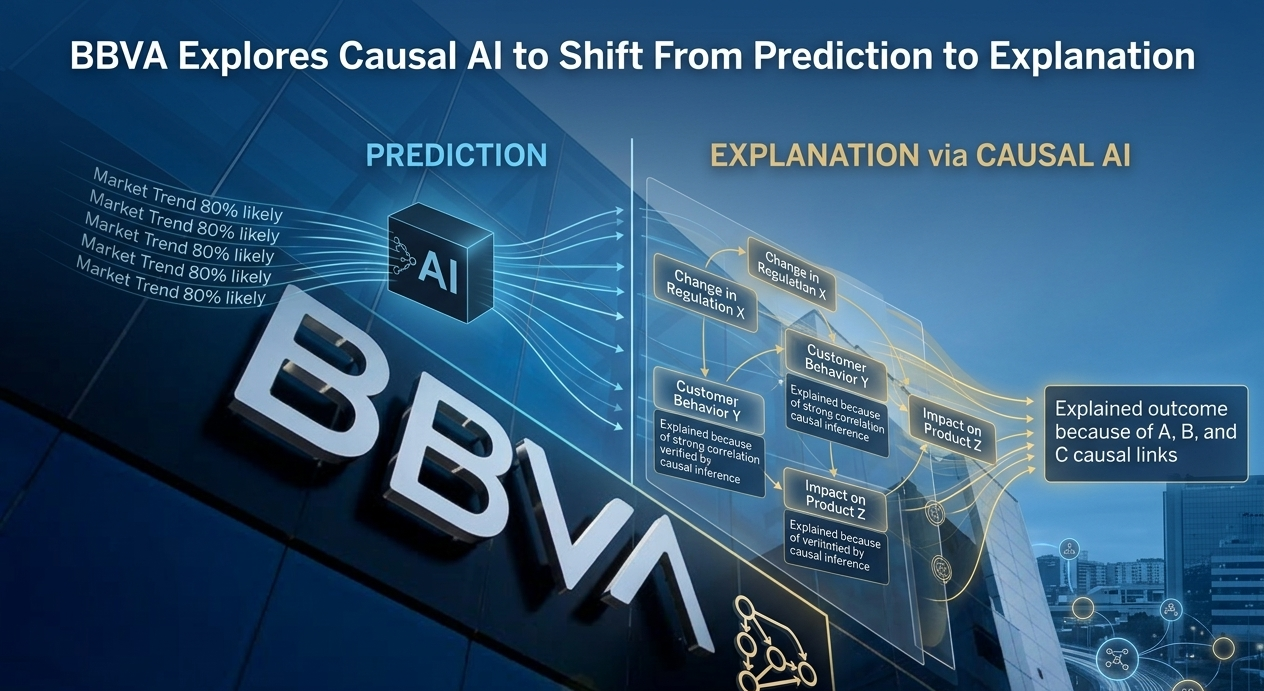
BBVA recently published a detailed piece on the role of causality in artificial intelligence, emphasizing the transition from simple prediction to genuine explanation of why events occur. The bank’s data‑science team argues that causal models can uncover the underlying drivers of financial outcomes, something traditional correlation‑based AI struggles with. By integrating causal inference techniques, BBVA aims to improve the reliability of its risk assessments and regulatory reporting. The article walks through the methods being adopted, such as structural causal models and counterfactual analysis. It also discusses how these tools can help the bank respond more effectively to market shocks and customer behavior changes. Overall, the piece positions causal AI as a strategic priority for the institution’s future technology roadmap.
The article then outlines the concrete steps BBVA is taking to embed causality into its AI pipelines. It also highlights the broader impact these steps could have on financial risk management.
What Changed?
- BBVA introduced causal inference frameworks into its existing machine‑learning workflows.
- The bank began training models that can simulate interventions and predict counterfactual scenarios.
- Risk‑assessment pipelines now incorporate causal graphs to identify true drivers of loss events.
- Compliance teams are using causal explanations to meet emerging regulatory expectations for model transparency.
- BBVA plans to share its causal AI findings with industry partners, encouraging broader adoption in finance.
Why Causal AI Matters for Finance
BBVA’s focus on causal AI signals a shift toward more transparent and accountable machine‑learning models in banking, helping institutions move from merely predicting outcomes to understanding the drivers behind them.