

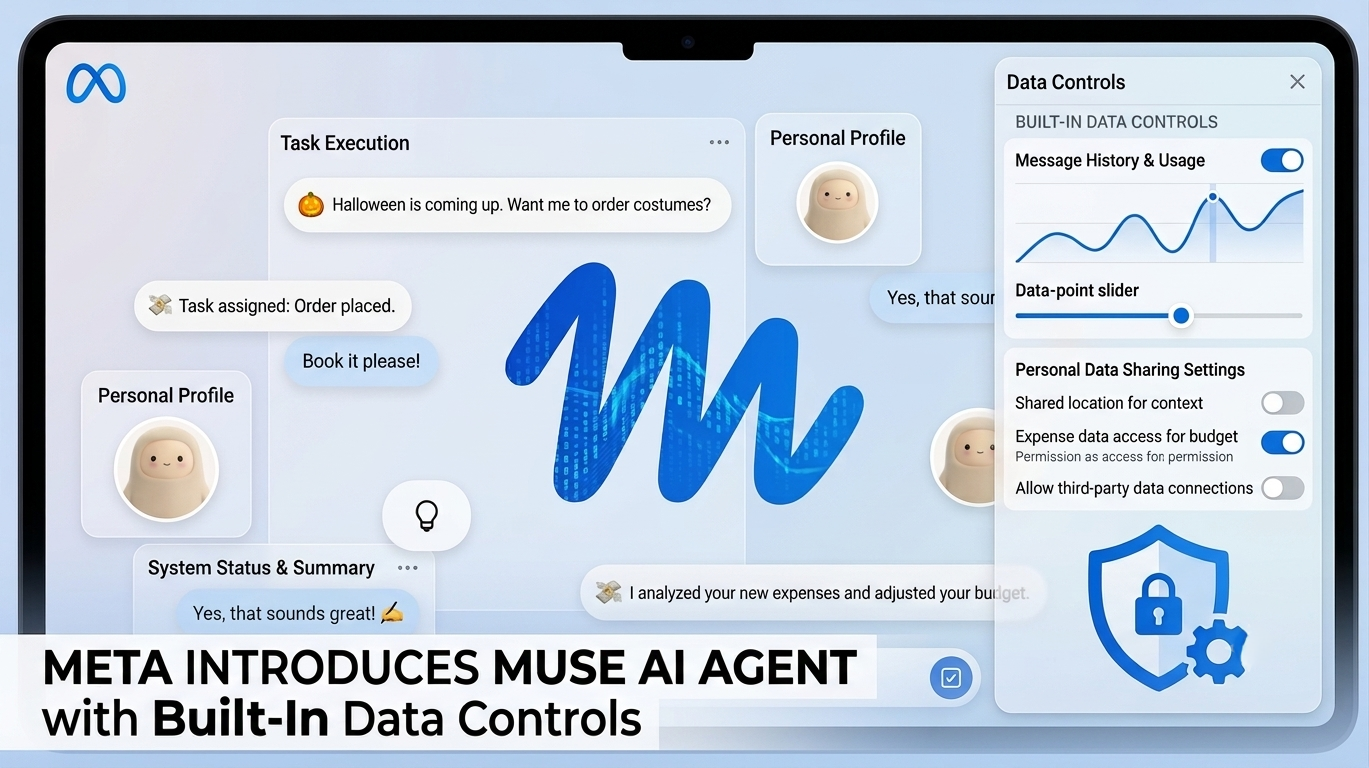
Meta has launched Muse, an AI‑driven conversational agent designed to work across its suite of apps. The service promises to answer questions, draft content, and assist with tasks directly within platforms like Instagram and WhatsApp. Meta says Muse runs on its own large‑language‑model technology and offers users granular control over data that the agent can access. The launch follows Meta’s broader push to embed generative AI features into everyday social experiences. Privacy details indicate that data used to improve the agent can be stored locally or deleted on request. The announcement positions Muse as a competitor to other AI assistants while emphasizing Meta’s stance on user data handling.
The rollout brings concrete capabilities to users across Meta’s ecosystem. It also raises questions about how personal data is processed and protected.
What Changed?
- Meta released Muse, an AI conversational agent that can generate text, images, and code within its apps.
- The agent is powered by Meta’s proprietary large‑language‑model infrastructure, reducing reliance on external AI providers.
- Users can opt‑in to let Muse access their personal data, and they can delete that data at any time through built‑in controls.
- Muse is integrated with Instagram, WhatsApp, and other Meta services, allowing seamless assistance without leaving the platform.
- Meta announced that data used to improve Muse will be stored securely and will not be shared with advertisers.
Why Meta’s Muse Agent Matters
Meta’s introduction of the Muse AI agent shows how large tech firms are turning conversational AI into everyday helpers while also foregrounding data‑privacy choices, signaling a shift in how users will interact with social platforms.