

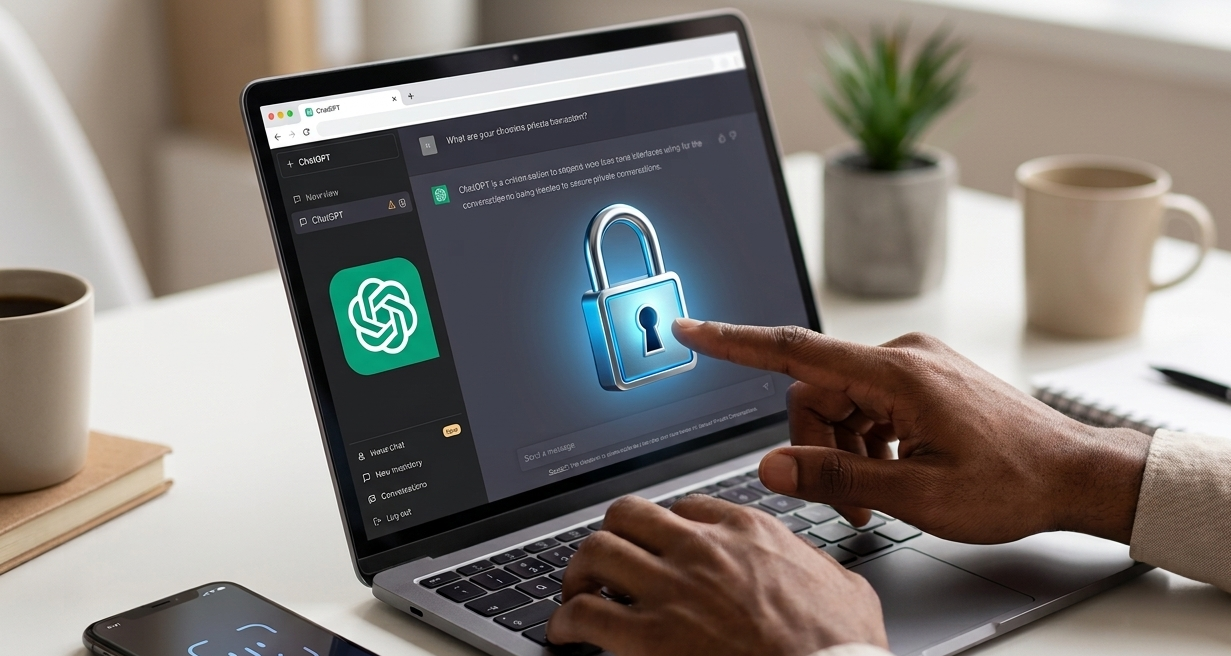
OpenAI is testing a new privacy option for ChatGPT that lets users hide specific conversations behind a lock. The feature, previewed in a recent update, adds a lock icon to the chat interface, enabling a password, PIN, or biometric safeguard. By encrypting the content of locked threads, the company aims to protect sensitive information from accidental exposure. The rollout is currently limited to a beta group, with broader availability planned pending user feedback. This development reflects heightened user demand for greater control over personal data in AI applications. If adopted widely, it could reshape expectations for privacy in everyday AI use.
This move directly addresses growing concerns about data privacy in AI chat tools. It also paves the way for broader security enhancements across conversational platforms.
What Changed?
- A lock icon appears next to each chat, allowing users to password‑protect individual threads.
- Locked chats are encrypted on the device, preventing unauthorized access even if the account is compromised.
- Users can choose a PIN, password, or biometric method to unlock protected conversations.
- Locked threads are hidden from the main chat list until the correct authentication is provided.
- The feature is being released as a beta, with OpenAI collecting feedback before a full public launch.
The significance of ChatGPT’s upcoming lock feature
The lock feature signals OpenAI’s commitment to user privacy, giving individuals direct control over who can view their AI conversations and setting a precedent for secure AI interactions.