

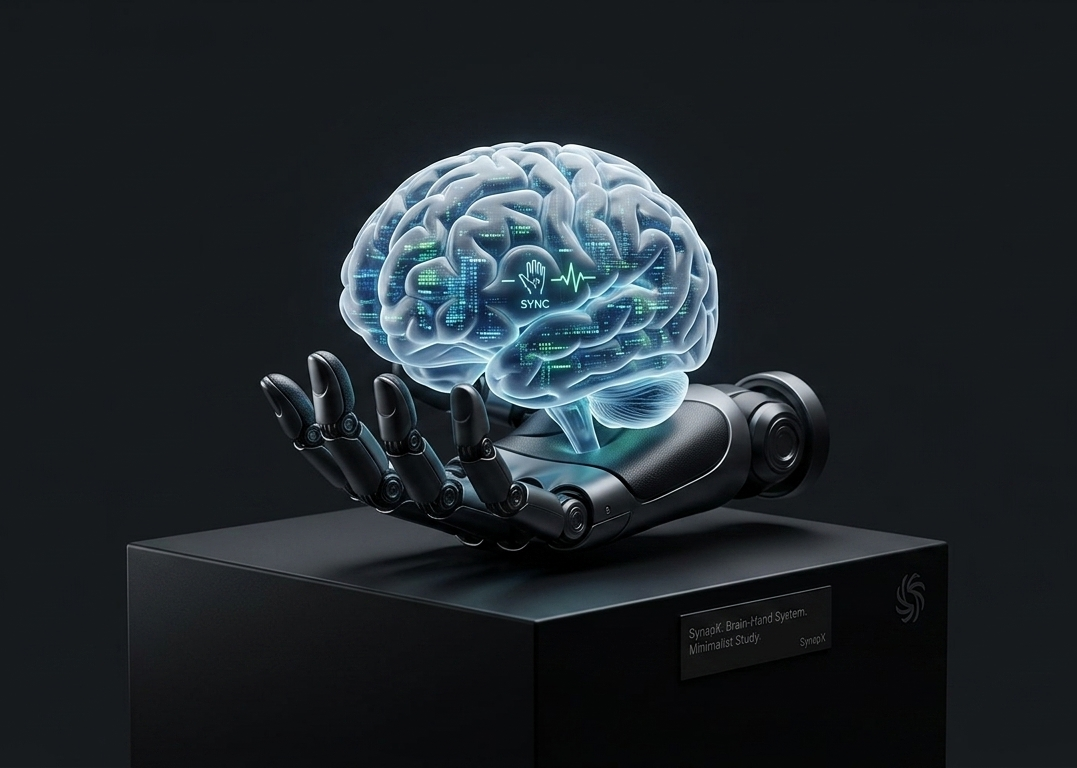
At the 2026 World Rally Championship event, technology firm SynapX revealed its new Brain‑Hand‑Data system, a platform that records a driver’s brain activity and hand motions alongside traditional vehicle telemetry. The live showcase demonstrated the system’s ability to sync neural signals with on‑board data streams, offering unprecedented insight into driver decision‑making. SynapX positioned the technology as a tool for performance coaching, safety enhancements, and next‑generation vehicle automation. The event attracted attention from teams, engineers, and sponsors eager to explore data‑driven competitive edges. By presenting a working prototype on a rally car, SynapX moved the concept from lab to track. The reveal underscores a growing convergence of neuroscience, AI, and motorsport engineering.
The demonstration highlighted how the system captures neural and hand‑movement signals in real time. It also outlined the immediate benefits for driver performance analysis and vehicle control.
What Changed?
- SynapX introduced a functional prototype that captures synchronized brainwave and hand‑movement data during rally driving.
- The system integrated with existing vehicle telemetry, allowing combined analysis of driver intent and car performance.
- Rally teams observed immediate feedback on driver stress levels and grip patterns, opening new avenues for coaching.
- Data security protocols were highlighted to protect sensitive neuro‑cognitive information collected on the track.
- The showcase sparked interest from automotive manufacturers seeking to embed neuro‑feedback loops into future autonomous platforms.
Why This Showcase Matters for the Future of Motorsports
SynapX’s Brain‑Hand‑Data showcase at WRC 2026 signals a concrete step toward integrating neuro‑cognitive insights with vehicle telemetry, hinting at a future where driver intent and machine response are tightly coupled. Readers should recognize that this event illustrates both a technological proof‑point and a strategic move to embed advanced human‑machine interfaces in high‑performance motorsports.